International STEM Summer Camp for Omani Students
Join the premier international STEM summer camp at Lawrence Technological University, designed for Omani students in grades 10-12. Explore robotics, AI, and engineering while living on a US campus. Start your global journey today!
By Mohamed ELMogey, Founder & Lead Educational Consultant of STEAM Leaders Oman.
STEAM Leaders International Summer Programs
In today’s fast-changing world, students need more than just classroom knowledge. They need real-world skills, global exposure, and hands-on learning experiences that prepare them for future careers. This is where international STEM camps play a powerful role. Through carefully designed programs, STEAM Leaders, in collaboration with Lawrence Technological University (LTU), proudly provides an international residential STEM camp experience for Omani students. Moving beyond traditional workshops, this partnership offers a life-changing immersion on LTU’s campus in Michigan, USA—combining academic excellence, innovation, and global exposure in a true university learning environment.
Why Lawrence Technological University?
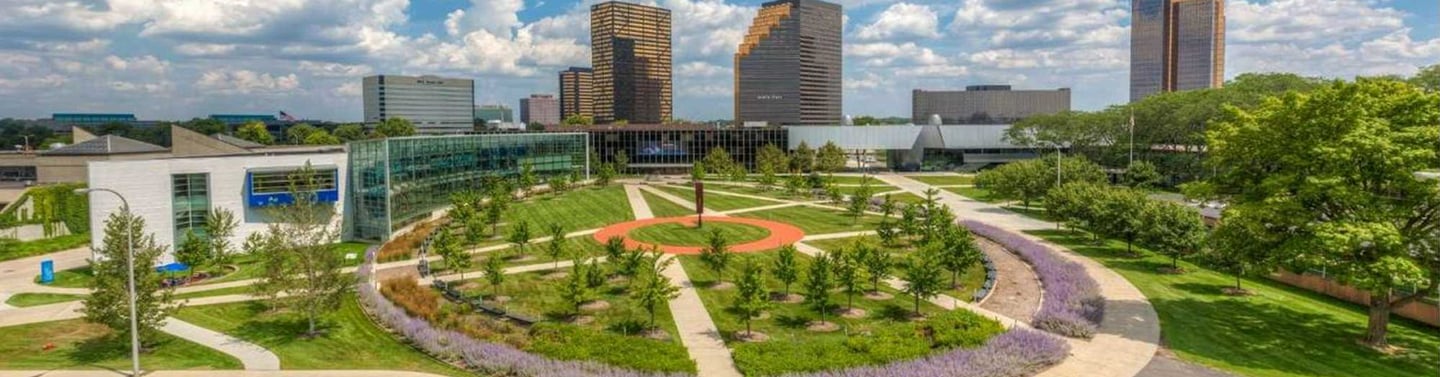
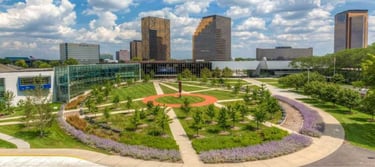
Lawrence Technological University (LTU) stands out as an ideal partner for delivering a meaningful international STEM camp due to its strong focus on engineering, technology, and real-world learning.
Choosing the right environment is crucial for a student’s growth and success. STEAM Leaders has built a strong relationship with LTU for several critical reasons, making it the ideal destination for Omani students seeking a world-class STEM experience.
LTU welcomed over 700 international students to its 2025 Marburger STEM Center Summer Programs, proving its status as a premier global hub for young innovators.
The "Theory and Practice" Approach
LTU is known for its “Theory and Practice” approach, where students learn concepts and immediately apply them through hands-on projects. This learning style perfectly aligns with STEAM Leaders’ educational philosophy, making the collaboration both natural and impactful. Since its founding in 1932 with support from Henry Ford, LTU has been built for the builder, allowing students to spend the majority of their time in labs and design studios turning abstract concepts into physical prototypes.
A Reputation for Excellence
The university has a long-standing reputation for excellence in several key areas:
Engineering and Applied Sciences
Technology and Innovation
Architecture and Design
Robotics and Automation
Global Headquarters of Robofest
LTU is the birthplace and international home of Robofest, one of the world’s most prestigious autonomous robotics competitions. Because STEAM Leaders is the official organizer of Robofest in Oman, our students aren't just guests—they are part of the LTU family. They gain access to university-level resources, innovation spaces, and mentors who set the global standards for robotics.
Direct Access to Ph.D. Faculty
At many large universities, summer campers are often taught by graduate students or teaching assistants. At LTU, our students work directly with full-time professors and industry experts. This level of mentorship provides Omani students with a much higher quality of academic guidance, as they learn from the very same experts who lead the university's degree programs.
Why an International STEM Camp?
Choosing to travel for a STEM camp is a big decision, but it’s one that changes a student’s future. While local workshops are a great start, stepping onto a global stage at LTU offers benefits you simply can’t get at home:
A "College Trial Run": Students live in university dorms and eat in the dining halls. It’s the perfect way to build independence and see what life is really like as a student in the USA.
Global Networking: At the Marburger STEM Center, our students work alongside peers from the US, Brazil, China, and beyond. They don't just build robots; they build a global network of friends and future colleagues.
Advanced Lab Access: Students get hands-on with industrial-grade tools—like professional 3D printers, laser cutters, and advanced robotics sensors—that are often unavailable in standard classrooms.
The Confidence Boost: There is nothing quite like the pride of finishing a complex engineering project in a world-class US laboratory. Students return to Oman with the confidence that they can succeed anywhere in the world.
LTU International Residential STEM Camp
For students looking for the ultimate "college preview," this is more than just a daytime workshop. Designed specifically for rising students in grades 10 to 12 (ages 14 to 18), this program offers a true glimpse into the future. Because this is a residential camp, participants don’t just visit the university—they live there. Students stay in modern, secure campus residence halls and enjoy full meal plans in the university dining commons, experiencing exactly what it’s like to be an American college student.
The camp sessions run from July 13 to July 31, 2026. Each specialized program is a 5-day intensive session running Monday to Friday, from 9:00 a.m. to 4:00 p.m.
Important Participation Note: Because each track is a full-day, deeply immersive lab experience, students must select only one program per week. Many students choose to attend for two or three weeks to explore multiple fields of interest!
Week 1: July 13 – 17 (10 Programs Available)
Students must select one of the following ten tracks:
Biomedical Engineering: Step into the intersection of medicine and technology by designing wearable biosensors and practicing 3D scanning for personalized medical projects. Students use CAD modeling and motion capture systems to analyze human movement and experiment with bioprinted scaffolds. This track is a hands-on journey through orthopedic repair modeling and cardiovascular fluid analysis, perfect for future doctors and engineers alike.
Code-to-Print: Move beyond traditional drag-and-drop modeling and learn to "write" 3D objects using OpenSCAD, a logic-based design software. Students master Boolean operations and parametric design to create complex, customizable parts like professional Lego-style components. By the end of the week, teams plan, code, and print a multi-part physical project that showcases their computational thinking skills.
Networking, Cybersecurity, & AI: Explore how the modern internet stays secure and functional by using real diagnostic tools to detect and prevent digital threats. Students get hands-on experience with Raspberry Pi microcontrollers—which they keep—to build projects integrating AI programming and network security. The week includes industry tours and team demonstrations of functional, AI-driven security systems.
Engineering of Smart Cities: Investigate the future of urban life by using radar guns, laser scanners, and soil testing equipment to see how infrastructure responds to the environment. Each day focuses on a different pillar—from transportation to water resources—culminating in a "Digital Twin Challenge" using simulation software. This program teaches students how to turn raw sensor data into safer, more sustainable cities.
Esports – Not Just a Game: Discover the massive STEM ecosystem behind competitive gaming, from broadcasting and game design to player performance analysis. Students engage in scrimmages across popular titles like League of Legends and Valorant while exploring scholarship pathways and shoutcasting workshops. The week features motion capture sessions and drone flying, proving that gaming is a gateway to high-tech careers.
Astronomy and the Cosmos: Follow the timeline of space discovery by observing sunspots through telescopes and investigating the chemical composition of stars using light analysis. Students experiment with superconductors and magnets to model planetary motion before designing their own high-performance rockets. The program concludes with a live rocket launch that applies the physics of motion and propulsion learned throughout the week.
Placemaking Through Landscape Design: ork alongside professional landscape architects to reimagine public spaces like parks, trails, and school campuses. Through walking tours of Detroit and the LTU campus, students find design inspiration to create their own artistic and functional public space models. No prior experience is needed to start designing the sustainable, beautiful environments of tomorrow.
Robotics I: Build a strong foundation in automation by assembling circuits and programming Arduino microcontrollers to bring robots to life. Students learn how sensors allow machines to interact with their surroundings, working in teams to solve navigation and reaction challenges. This hands-on intro prepares students for the advanced logic and sophisticated systems found in Robotics II.
Summer Startup Sprint: Experience the high-pressure world of tech founders by turning a real-world problem into a pitch-ready business model. Using a "Sprint Simulator" and strategy games, teams manage limited budgets and resources to test pricing and marketing strategies. The week ends with a pitch competition judged by real entrepreneurs, giving students the confidence to launch their own ideas.
Youth Entrepreneurship & Global Trade: Step into executive roles like VP of Marketing or Supply Chain to solve global challenges using emerging technologies like drones and semiconductors. Students engage in live conversations with international entrepreneurs and tour the Centropolis Innovation Center to see global trade in action. The program culminates in a "Shark Tank" style event where teams present international business strategies to industry experts.
Week 2: July 20 – 24 (11 Programs Available)
Students must select one of the following eleven tracks:
Architecture & Interior Design: Discover how designers imagine spaces before they exist by mastering the art of sketching, physical model-making, and digital visualization. Students explore how space, light, and material choices shape our daily experiences while completing their own small-scale design projects. This studio builds the spatial thinking and visual literacy skills essential for turning creative imagination into a tangible, built reality.
Automotive Engineering: Dive into the heart of vehicle design by working in teams to build and test a 1/12-scale electric vehicle, focusing on powertrains, suspension, and aerodynamics. Participants learn to use professional metalworking tools and 3D printers in LTU’s fabrication labs while touring world-class facilities like the Ford Rouge Factory. It is a high-energy introduction to the engineering roles that drive the global automotive industry from the "Motor City."
Brand Lab (Marketing Sprint): Become a creative strategist in this high-speed sprint where teams take a raw product and transform it into a desirable global brand in just five days. Students design packaging, shoot professional content, and use AI tools to map out social media and retail plans based on real-world pricing psychology. The week ends with a competitive pitch of a full brand launch strategy, proving that great marketing is both a science and an art.
Computer Vision & Self-Driving Cars: Learn how autonomous vehicles "see" and make split-second decisions using Python, deep-learning models, and the ROS 2 (Robot Operating System) framework. This college-level track challenges students with prior programming experience to navigate real-time road-following tasks using AI and advanced sensors. It is a rigorous, future-focused program designed for students ready to lead in the field of autonomous transportation.
Motion by Design: Explore the intersection of transportation and wellness by designing new, human-centered rideable concepts like innovative bikes and scooters. Through rapid prototyping and 3D printing, students analyze ergonomics and user experience to create mobility devices that encourage active, joyful movement in cities. This program empowers students to use design thinking to solve the logistical and health challenges of modern urban transit.
RoboDog Adventures: Master Python coding by controlling a programmable quadruped robot, progressing from basic loops and variables to advanced SDK-driven behaviors. Students build custom navigation programs and mini-games, applying logic to make their "RoboDog" react to environmental sensors and complex motion patterns. The week concludes with the RoboDog Race, where students showcase their ability to translate code into precise, coordinated robotic movement.
Robotics II: Take the next step in engineering by assembling sophisticated robot platforms from the ground up in the Rockwell Automation Lab. Students master precision motion control by soldering electronic components, integrating motor drivers, and tackling high-stakes drone programming challenges. This track emphasizes real-world engineering workflows—testing, troubleshooting, and refining—essential for anyone pursuing a career in advanced automation.
Science of the Built World (Concrete Camp): Discover the chemistry and innovation behind the world’s most used construction material by designing and testing custom high-performance concrete mixes. Students perform industrial laboratory tests and investigate cutting-edge sustainable technologies, including alternative cements and even "lunar" concrete mixes. Field visits to active construction sites and plants connect these lab experiments to the massive infrastructure projects that support our world.
The Shape of Ideas: Learn the visual language that designers use to communicate emotion and intention through composition, color, and pattern. Students practice abstraction by identifying underlying structures in nature and the built environment, translating conceptual ideas into intentional design decisions. This foundation in visual literacy is a critical asset for future architects, graphic designers, and creative problem-solvers.
The Structure of Play: Explore "play" as a professional method for solving complex design problems across architecture and product engineering. Students work in teams to generate rapid, low-fidelity prototypes, learning to remix concepts and break away from conventional patterns through fast-paced challenges. This approach teaches that innovation is a process of iteration and experimentation rather than searching for instant perfection.
Youth Entrepreneurship: Step back into the role of a global executive to solve international business challenges using AI, sustainable semiconductors, and autonomous systems. This intensive session connects students with global mentors and entrepreneurs to design viable trade strategies for the high-tech industries of the 21st century. Participants build the leadership and critical-thinking skills required to manage the complex, connected world of global innovation.
Week 3: July 27 – 31 (10 Programs Available)
Students must select one of the following ten tracks:
Build the Block (Real Estate Sprint): Step into the dual roles of developer and architect to plan a new community site from the ground up while balancing budgets, zoning, and sustainability. Teams use the Our City Builders simulation to test how their housing and retail choices impact long-term community outcomes. The week concludes with a professional proposal presentation that explains how your creative vision provides real value to the city.
Code, Circuits, & Creativity: Master the fundamentals of electrical engineering by building real electronic circuits and programming Arduino microcontrollers using the C language. Students learn to read schematics and use digital multimeters to debug their hardware, experiencing firsthand how engineers bring ideas to life. By the end of the week, participants design and assemble their own interactive electronic game, bridging the gap between hardware and software.
Design Your Own Mobile App: Transition from app user to app creator by exploring the fundamentals of UX/UI design, including layout, typography, and interactive color theory. Using beginner-friendly design software, students identify a real-world problem and build a clickable, high-fidelity digital prototype for others to test. This studio is perfect for students building a portfolio in digital media, technology, and human-centered innovation.
Digital Storytelling & Media Lab: Learn to translate complex scientific and mathematical ideas into engaging films, podcasts, and digital art pieces through the STEM StoryLab. Students master scripting, audio recording, and video editing to create "animated explainers" or mini-documentaries that make abstract concepts approachable. This track empowers students with the communication confidence and technical media skills needed in a tech-driven world.
Esports: Explore the collegiate esports ecosystem through popular titles like Rocket League and Valorant while investigating high-tech career paths in broadcasting and game design. Students participate in shoutcasting workshops, motion analysis with biomedical tools, and drone flight sessions with LTU faculty. This program highlights the scholarship pathways and engineering roles that support the global competitive gaming industry.
Future Forward (Speculative Design): Use "speculative design" to imagine and prototype artifacts from a future world shaped by AI, climate change, and evolving social systems. Instead of just solving today's problems, students build fictional services and visual narratives to spark dialogue about the trade-offs of emerging technologies. This program strengthens divergent thinking and storytelling skills essential for visionary leadership in any creative field.
Industrial Engineering: Discover the core principles of manufacturing by using Legos to simulate a professional assembly line, just like the one Henry Ford used for the Model T. Students apply math, science, and visualization experiments to optimize the car-building process for maximum productivity and quality. This high-energy session turns complex engineering concepts into a fun, challenging puzzle about how systems work.
Run of Mill (Machining): Get hands-on with industrial lathes, mills, and drill presses to transform raw metal into a custom-engineered product of your own design. Students learn professional CAD modeling and fabrication from the ground up in a supervised lab, seeing how modern manufacturing blends precision tools with digital design. The week includes tours of LTU’s motorsports labs and a major automotive plant to see large-scale production in action.
VisionAI: Dive into the fundamentals of AI by using Python and TensorFlow to build neural networks that can "see" and interpret images in real-time. Students progress from basic data analysis to creating team-based AI projects that mimic the technology used in self-driving cars and medical imaging. This technical track fosters the innovation and critical-thinking skills required for the rapidly expanding field of data science.
Youth Entrepreneurship: Step into the role of a VP of Marketing or Product Development to solve a major international challenge using cutting-edge technologies like sustainable semiconductors and drones. Guided by industry mentors, teams design global business strategies and participate in a field trip to the Centropolis Innovation Center. The week ends with a competitive pitch event, preparing students for leadership in the 21st-century global innovation economy.
The All-Inclusive Experience
The investment for the program is standardized across all available tracks, regardless of which week or subject you choose.
Price per Program: $1,400 USD
What’s Included:
Full tuition for the selected 5-day intensive track.
All lab materials and specialized equipment use.
On-campus housing in university residence halls.
Three meals per day (Breakfast, Lunch, and Dinner) except on weekends.
Official LTU Certificate of Completion.
The Residential Experience: Where Students Will Stay
Safety and comfort are top priorities. Students will be fully immersed in American university life by living directly on the LTU campus:
Accommodation: Students stay in LTU’s modern, high-security residence halls. These dormitories feature controlled access, shared common areas for socializing, and high-speed internet.
Dining & Meals: A full meal plan is included. Students have breakfast, lunch, and dinner through the University Dining Services, which offers a variety of healthy, international food options and can accommodate specific dietary requirements.
Program Duration
The 2026 International STEM Camp is structured into three distinct weekly blocks. Students can choose to attend for one, two, or all three weeks:
Week 1: July 13 – July 17, 2026
Week 2: July 20 – July 24, 2026
Week 3: July 27 – July 31, 2026
Daily Schedule: Monday to Friday, 9:00 a.m. – 4:00 p.m. (with organized evening and weekend activities for residential students).

Ready to Take the Lead?
Seats for the International STEM Summer Camp are highly limited for the Omani cohort. Don’t miss your chance to build a global portfolio at a top-tier US university.
Once you submit the form, a member of the STEAM Leaders team will contact you to discuss visa coordination and flight details.