Woodworking in Omani Schools
Discover how woodworking in Omani schools brings hands-on creativity to life. Students build practical skills and confidence through real-world engineering.
By Mohamed ELMogey, Founder & Lead Educational Consultant of STEAM Leaders
Why Woodworking Should Be Part of Every School's Learning Experience
While digital literacy is essential, students deeply benefit from experiences that engage their senses and develop practical craftsmanship. Woodworking provides a vital balance to screen-heavy education by allowing learners to interact with physical materials and understand exactly how objects are made.
There is immense satisfaction in turning an abstract idea into a tangible reality. Whether designing a functional object, a decorative piece, or a mechanical model, this hands-on freedom encourages true experimentation and personal expression. As students cut, shape, and assemble, they naturally develop a growth mindset. In the maker space, mistakes aren't just permanent errors—they become immediate opportunities for troubleshooting, improvement, and discovery. Ultimately, blending digital education with physical making helps students become well-rounded thinkers and confident creators.
Why Modern Woodworking Matters for 21st-Century Learners
When students step up to a woodworking workstation, they aren't just building a physical object—they are building cognitive resilience. Woodworking delivers unique pedagogical benefits that digital simulators simply cannot replicate:
Practical STEM Application: Measuring angles, calculating material tolerances, and understanding structural loads turn abstract geometry and physics formulas into immediate, practical realities.
Spatial and Kinetic Intelligence: Navigating three dimensions with physical materials refines fine motor skills, hand-eye coordination, and spatial reasoning.
Resilience and Problem Solving: Wood is an organic material. It has knots, grain patterns, and unique density variations. Working with it teaches students how to analyze unexpected material behavior, troubleshoot mistakes, and iterate on their designs.
To successfully integrate woodworking into a school ecosystem, the tools and safety parameters must scale alongside the students' developmental stages. A progressive, two-tiered pathway ensures that learning remains highly engaging, educationally rigorous, and—above all—safe.
1. Foundation & Primary Level (Grades 1–5)
At the primary school level, the focus is entirely on tactile exploration, building confidence around machinery, and understanding basic manufacturing workflows.
Young learners can safely operate adapted, modular micro-machines where the engineering minimizes risk—such as unique child-safe jigsaw blades that vibrate rather than cut skin. This allows children to experiment with absolute peace of mind for educators.
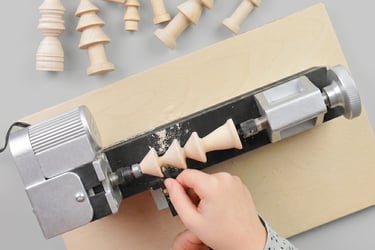
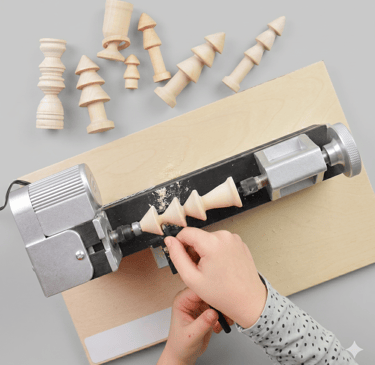
These foundational systems are designed to be entirely modular and desk-friendly, meaning schools do not need a dedicated, heavy-duty workshop. Using interchangeable, snap-together parts, students can easily reconfigure their workstation into a mini wood lathe, sander, or drill press within minutes. Working primarily with accessible, soft materials like balsa wood or thin plywood, younger students can safely craft functional toys, simple puzzles, and artistic models directly at their regular classroom tables.
Implementing a Progressive Woodworking Pathway
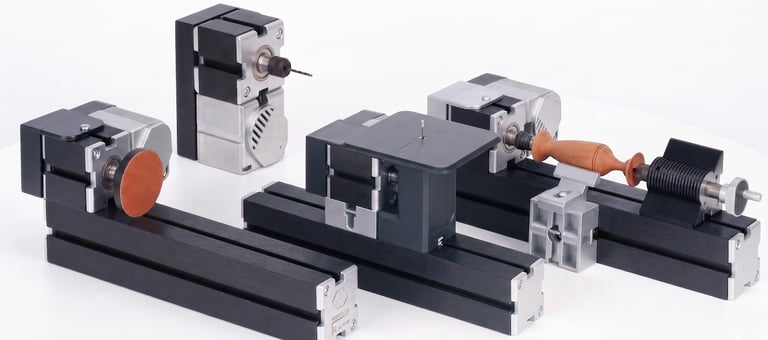
Core Tools & Projects for Primary Students:
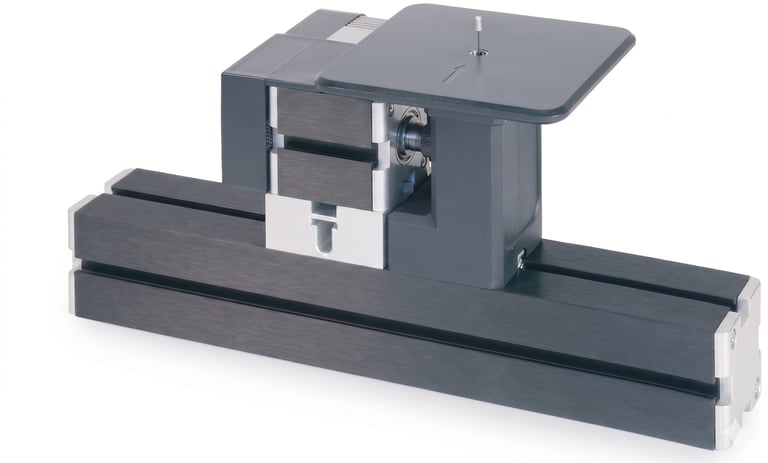
The Child-Safe Jigsaw
What They Learn: Curvilinear cutting logic. Students master the physics of steering a safety blade through thin wood, learning how to handle basic curves, sharp corners, and intuitive shapes while managing their hand-eye coordination.
What They Make: Custom jigsaw puzzles, stylized animal silhouettes, cartoon characters, and simple holiday ornaments.
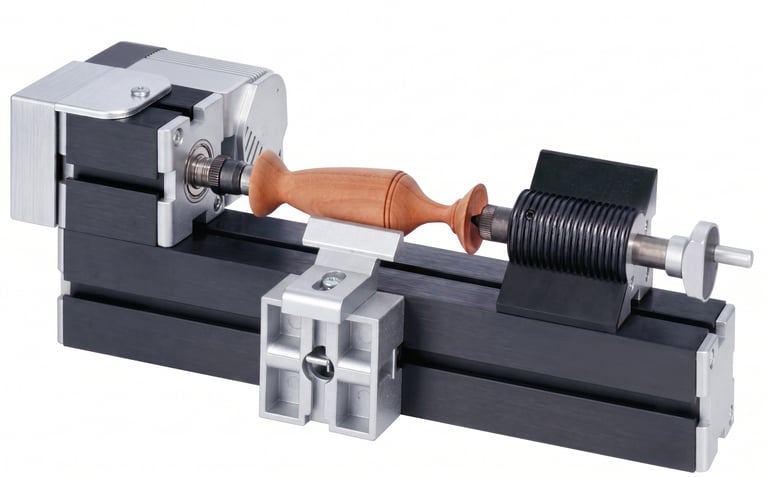
The Miniature Lathe
What They Learn: Rotational symmetry and geometry. Children learn to visualize objects radially, watching a square piece of balsa or soft timber transform into a perfectly smooth cylinder.
What They Make: Smooth wooden spinning tops, magic wands, miniature toy wheels, and simple honey dippers.
The Basic Sander
What They Learn: Grit progression and texture rules. Students discover the tactile properties of timber, learning that sanding with the wood grain preserves the surface, while sanding across it leaves damaging scratches.
What They Make: Hand-held toy cars with perfectly rounded edges, smooth building blocks, and personalized drink coasters.

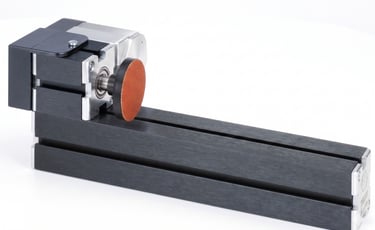
Hand Drill
What They Learn: Perpendicular alignment. Children train their muscles to keep a drill bit perfectly square (90°) to the surface of the wood so that their final assemblies aren't crooked.
What They Make: Simple wooden toolboxes, pencil holders, and basic pegboard games.

2. Middle School Level (Grades 6–9)
As students enter middle school, woodworking expands into rigorous engineering, detailed product design, and mechanical prototyping.
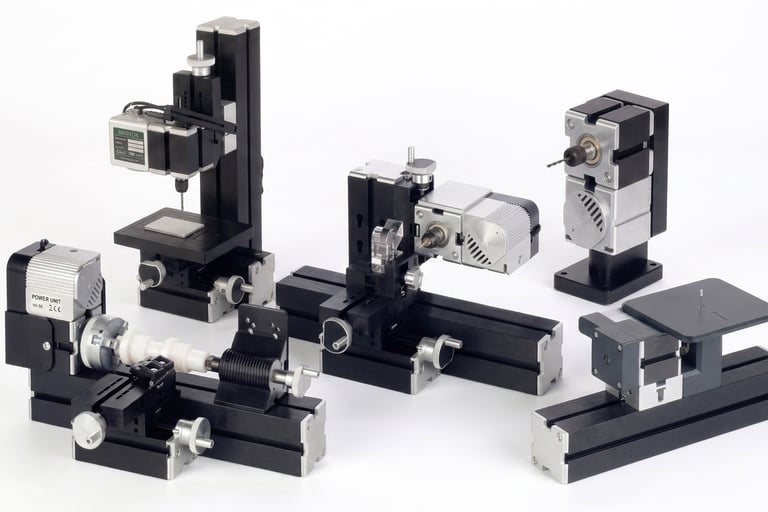
At this stage, the educational equipment steps up in durability and capability, utilizing robust, all-metal machine components that mirror real-world industrial standards. Students move beyond soft balsa, working confidently with harder timber, acrylics, and even non-ferrous metals. Using precision manual machine configurations, they bring complex structural projects to life, building the spatial logic and fine motor skills necessary for advanced engineering.
Advanced Tools for Middle School Students:
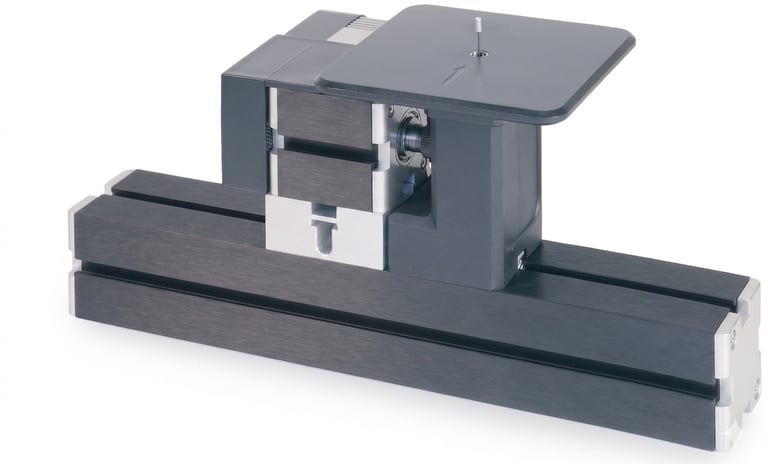
Jigsaw
What They Learn: Feed-rate awareness and material economy. Students develop patience and kinetic sensitivity, understanding that forcing a blade too quickly causes friction, binding, and inaccurate cuts. They also learn how to nest complex shapes closely together on a single sheet of plywood to minimize wood waste.
What They Make: Complex structural gears, customized skateboard decks, artistic wall signage, and structural ribs for model bridges or airplanes..
Heavy-Duty Lathe
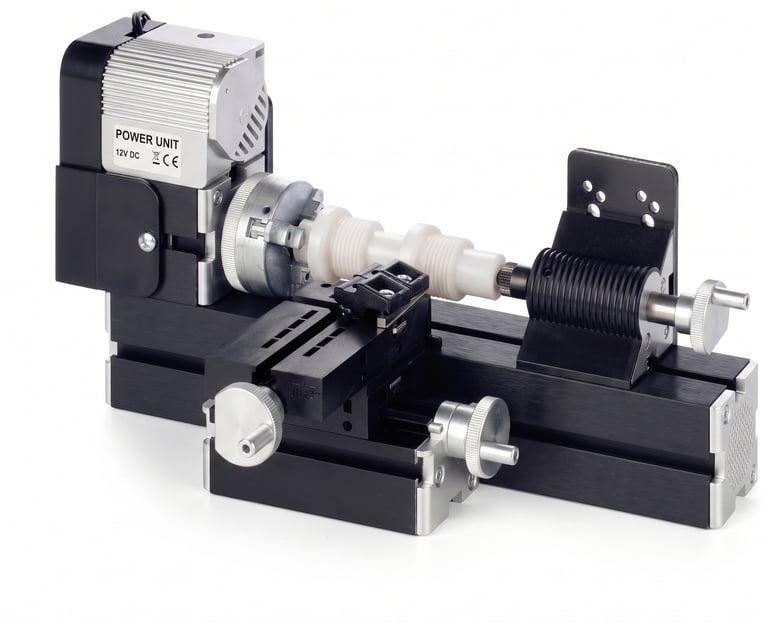
What They Learn: Gouge and chisel techniques alongside axis realignment. Students gain high-level fine motor control, discovering how changing the angle and pressure of a hand chisel alters the depth and texture of a spinning spindle.
What They Make: Custom pen bodies, rolling pins, furniture legs, tool handles, ornamental chess pieces, and decorative wooden bowls.
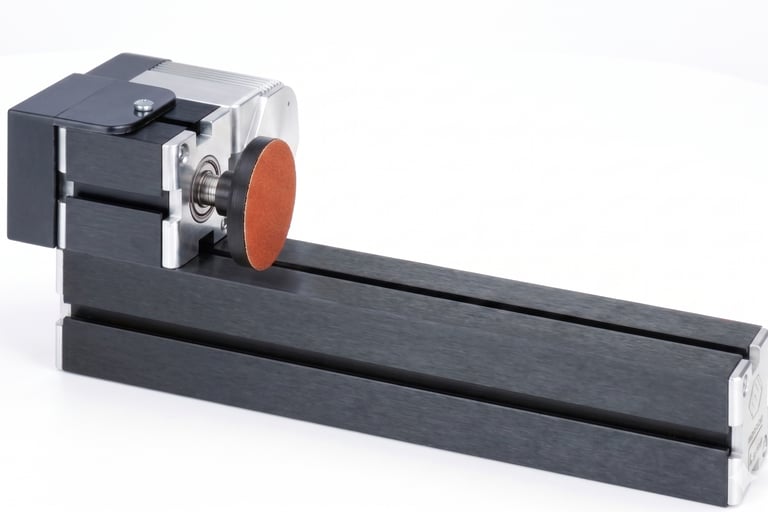
Sander
What They Learn: Precision tolerances and seamless assembly. Students use disc or belt sanding stations to micro-adjust the edges of joining pieces so they fit together perfectly with zero gaps.
What They Make: Ergonomic handgrips for tools, perfectly flush joints for jewelry boxes, smoothed-out smartphone amplifier stands, and polished picture frames.
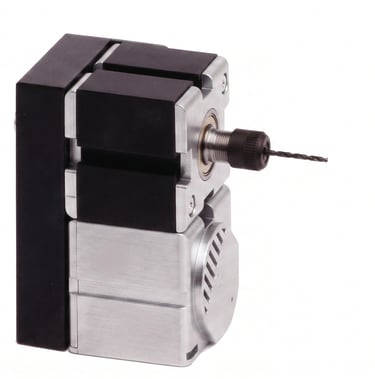
Hand Press Drill
What They Learn: Material pre-drilling logic, depth control, and torque management. Instructors teach the mechanical difference between pilot holes and clearance holes, demonstrating how skipping steps splits organic wood fibers.
What They Make: Multi-component kinetic robots, desktop organizers with custom-bored slots, flat-pack step stools, and mechanical automata models.
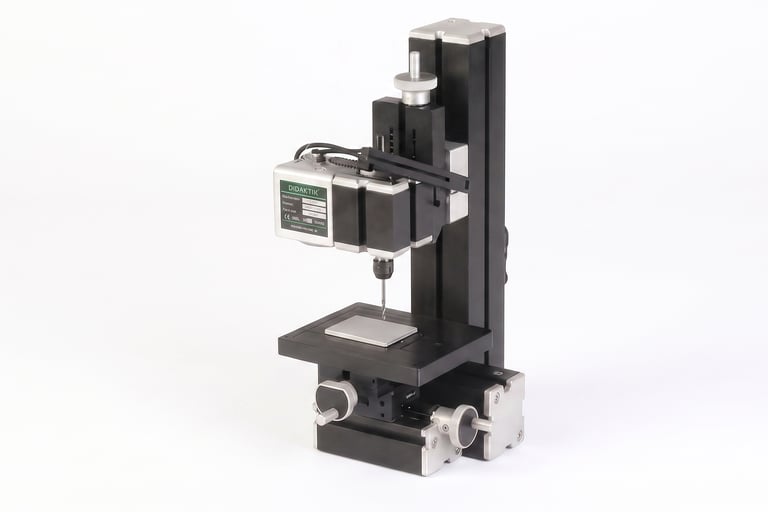
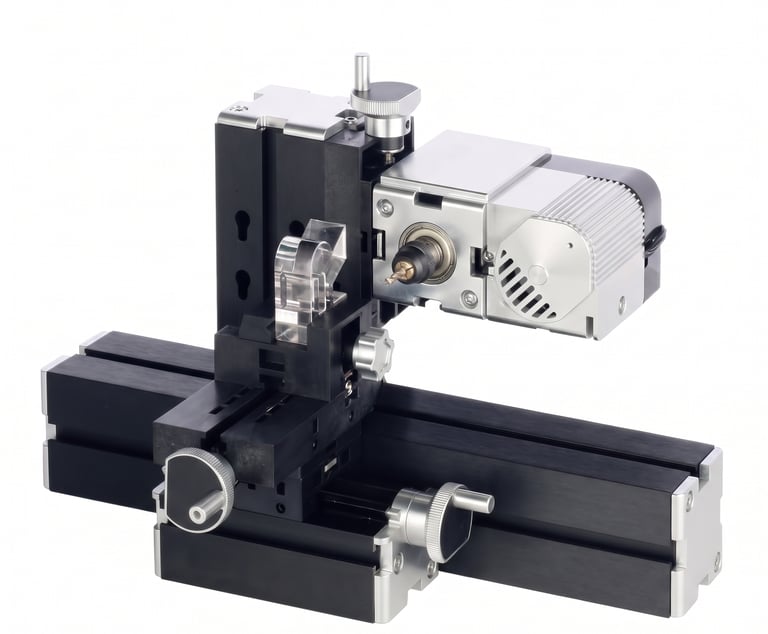
Milling Machine
What They Learn: X, Y, and Z-axis spatial navigation. Students learn how to manipulate handwheels to precisely move materials across three dimensions, mastering physical coordinate planes, depth of cut, and the mechanics of rotational material removal.
What They Make: Interlocking puzzle joints (like mortise and tenon), custom mechanical gears, precision-slotted tracks for kinetic projects, and perfectly routed channels for hidden wiring.
3. High School Level (Grades 10–12): The Digital Fabrication Lab
By high school, students have fully mastered the tactile properties of materials, precise measurement, and spatial logic. They are now prepared to graduate from traditional manual craftsmanship to modern automated manufacturing.
In these upper grades, the workshop evolves into a high-tech innovation hub. Physical woodworking seamlessly integrates with digital drafting software (CAD/CAM). Students design highly complex architectural and engineering blueprints on their screens, then send that code directly to automated machinery. By utilizing computer-controlled (CNC) routers, laser cutters, and 3D printers, students learn the exact rapid-prototyping workflows used by professional industrial design and engineering firms today.
🔗 Ready to transition your senior students from manual craft to advanced automated engineering? Discover the tools and layouts you need in our complete breakdown:
Bring Hands-On Making to Your School
Ready to transform your school's creative spaces and give your students a premium, hands-on engineering experience?
As a dedicated education services provider, we supply schools across Oman with these exact modular, child-safe woodworking kits and scalable machinery setups. Whether you are looking to introduce basic tactile crafting to elementary classrooms or build a complete middle school prototyping workshop, we provide the cutting-edge equipment and specialized lab solutions you need to get started seamlessly.
Equip your classrooms with the best in modern educational woodworking.
From Concept to Reality: Bringing Projects to Life
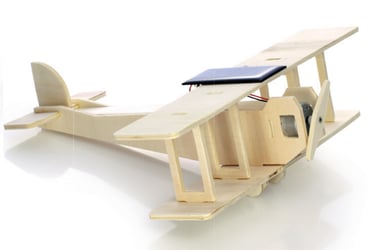
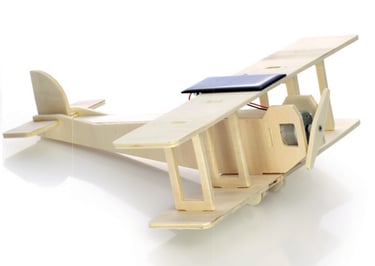
The true magic of a school maker space happens when traditional woodworking meets hands-on engineering. Using safe, modular equipment, students can easily shape raw timber on a lathe to create perfectly symmetrical pieces like miniature trees and decorative snowmen or use a jigsaw to cut out intricate frames for classic biplanes and rolling cars.
The learning reaches an exciting new level when students integrate basic electronic components into their wooden builds. By adding DC motors, battery packs, and mini solar panels, they can instantly transform their static models into fully functional, kinetic machines. Whether they are wiring a solar-powered wind turbine or engineering a motorized wooden vehicle, this cross-disciplinary approach allows young innovators to seamlessly bridge the gap between physical craftsmanship and working technology.